The following recipe compares using 3 different flour to water ratios for pizza dough. It uses sourdough but you could substitute with yeast.
The basic recipe is the following. I measure most of the ingredients so hopefully you have a scale.
- 130 g sourdough starter, can substitute with 1 tsp yeast
- 100 g cool water
- 1.5 g salt
- 1 Tbls olive oil
- 1 to 2 tsp honey – oil the teaspoon before adding the honey.
- bread flour – 140 g, 170g and 200g (3 different batches). You could use 00 pizza flour.
Following is the steps I used for each of the 3 dough types. The recipe makes enough dough for a 12 – 14 ” pizza with medium think crust or you could stretch out to make 2 small, thinner ones. Scale the dough to make more for more pizzas.
I used my stand mixer to mix/knead the dough. You could use a food processor or your hands. If using your hands, it would work best to mix the ingredients in a bowl, let stand for 1 hour then stretch the dough to build gluten.
Mixing the Dough
- Grab a bowl or dough tub large enough for the dough. If you have a stand mixer, use the mixer’s bowl. Add the flour and water to a bowl. Mix to combine so little or no dry flour remains. Cover and let sit for 1 hour. This is autolyse so hydrate the flour and start the gluten building.
- Add the sourdough into the your bowl. Mix to incorporate, either using your stand mixer (fitted with a paddle), by hands or a dough whisk.
- Add the salt.
- Continue mixing to build gluten and get a good elastic dough. For a stand mixer, I usually let it run in medium for 2 – 3 minutes.
- When done, let dough sit in a covered container for 30 mins. Perform a stretch and fold, let sit again and repeat 1 or 2 times.
- Oull the dough out of the contain and place on a lightly floured surface. Form the dough into a ball (about the size of a softball, larger if you like larger pizzas), utilize the flour on your surface to help with stickiness. Here is a helpful video. Place the shaped ball into your floured proofing tray.
- Put the dough in the refrigerator for ~24 hours.
Making the Pizza
- About 1 hour before you want to make pizzas, remove the dough from the refrigerator and let sit out to warm up.
- Get a sheet of parchment paper or a cornmeal dusted pizza peel ready to receive the pizza dough. Parchment should be large enough for a 14″ round dough. If using a peel, cover it with cornmeal to help the dough slide. I like using coarser cornmeal.
- Flour a working surface. Could be your counter, a large cookie sheet or pizza peel.
- Gently remove the dough from the container. You might need to use a dough scraper to release the dough if it is sticking to the container.
- Place the dough upside down on the flour surface. Brush on any clumps of flour on the bottom.
- Flip the dough over.
- Working from the center, gently stretch the dough out into a circle. Work the outer edges. You should be able to get it fairly thin without breaking a hole in it. Don’t over work the dough since that will flatten out all of the bubbles and you will end up with a tough lifeless pizza.
- Move the dough from to your parchment paper/ peel. Careful not to break it. You will need to do a little reshaping after moving it.
- Cover the dough with a towel or your proofing container. My container is a large rectangle so big enough to cover the dough. Let rest for 15 to 30 minutes
- Heat oven to 500 to 525 F or hotter if you can. I have a pizza stone in the oven which helps with the crust.
- When dough is ready, build your pizza and slide into the oven and bake for 6 mins. I made a different pizza topping for each dough. Each did have olive oil drizzled around the top before baking.
- If you don’t have a pizza peel, place the pizza on the parchment paper on the back of a cookie sheet. Slide the pizza into the hot oven and bake for ~6 mins but keep an eye on it.
Results of the trial
For each pizza dough, I worked the dough as least amount to shape into a pizza. The pizzas were built with tomato sauce first, cheese next then toppings. I usually don’t use a lot of cheese so you can see spot of sauce. Each pizza was cooked the same amount of time on parchment paper on top of my stone in my oven.
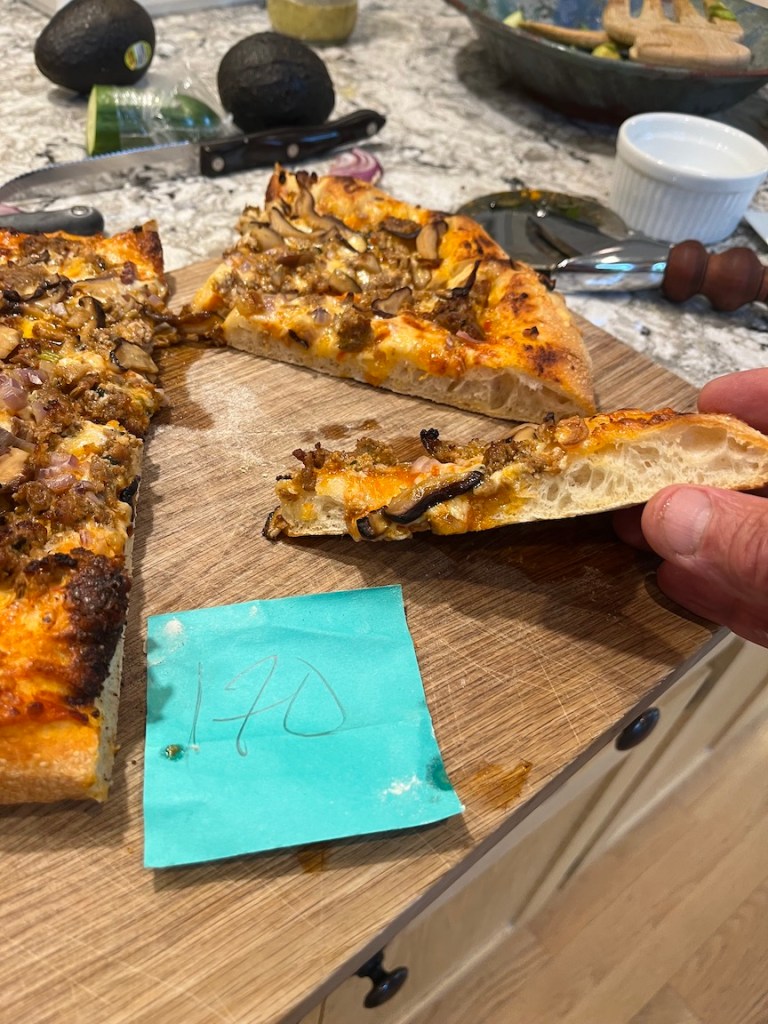
Each pizza has a nice crumb / hole structure as well as a good chew.
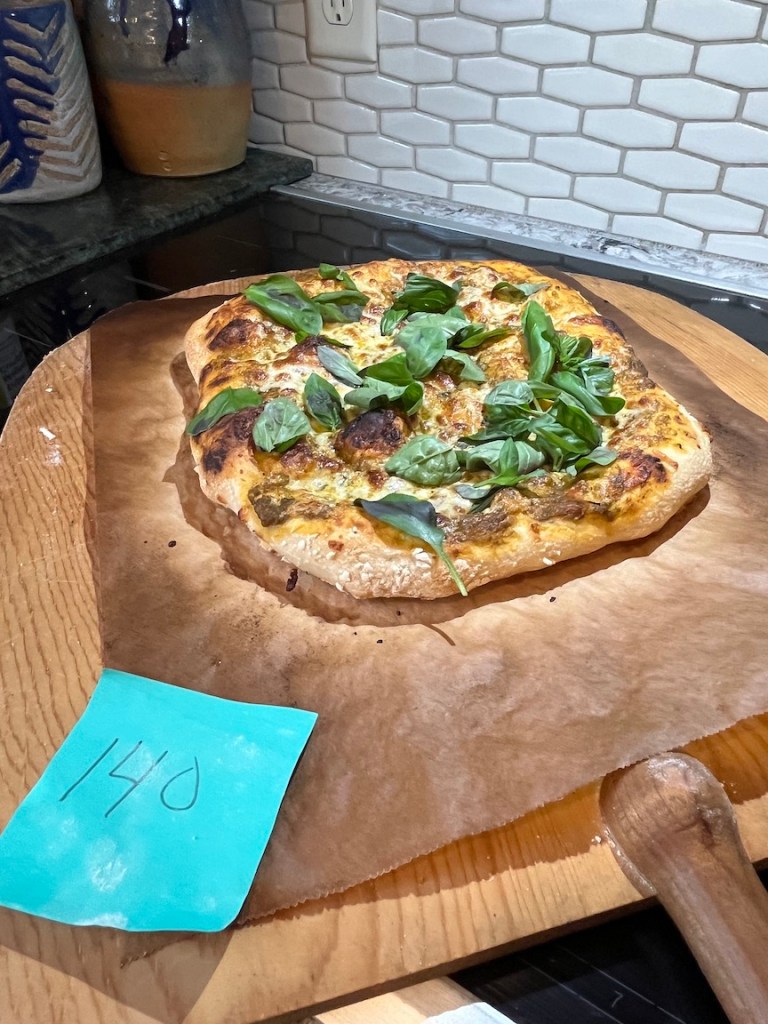
140 g Flour
The 140g makes a softer, wet dough very similar to the ratio I use to make a foccacia. When mixing the dough, it will stick to the sides of the mixing bowl. Continue to mix with the paddle until the dough releases from the sides. When handling the dough from the bowl to your flour surface, it is helpful to have your hands wet or coated in flour.
To form the dough into a ball, utilize the flour on your surface to help with stickiness. To form this dough into a ball, utilize the flour. This dough is wet, sticky and delicate.
Pulling this dough from the proofing tray after resting can be challenging. The dough should have flattened out during the rest and will be somewhat wet and sticky. Gently pull or use a dough scraper and working as described above.
Here a some photos of the resulting pizza. This was a Margherita sytle with the basil tossed on when the pizzas was removed from the oven. The group who tasted the dough, like it the most since it was very lite and airy. The dough is similar to one used by Gabriele Bonci on Chefs Table Pizza. The dough could be used as a base for a deepdish pizza which I like to make in one of my cast iron skillets.

170 g Flour
As expected, this dough is a bit more substantial than the 140 g. It is easier to work with and produces an airy pizza. It is not as lite as the 140 g. Tasters put is a #2.
The dough is not as sticky and more easily formed into a ball as well as stretch out into a pizza. Again, don’t over work it. You should be able to make this thinner than the other. Could also use it for a deep dish pizza.
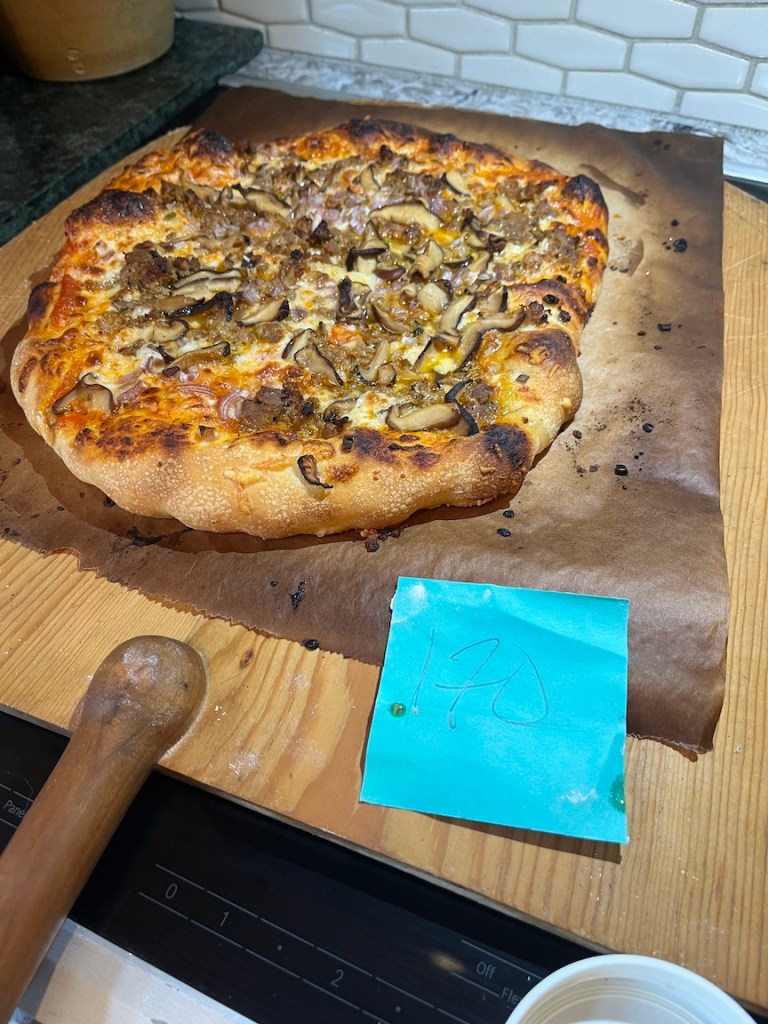
The pizza was made with tomato, sausage, shiitake mushrooms and diced shallots / onions. The cheese was a mix of fresh mozz and parmesan cheeses.
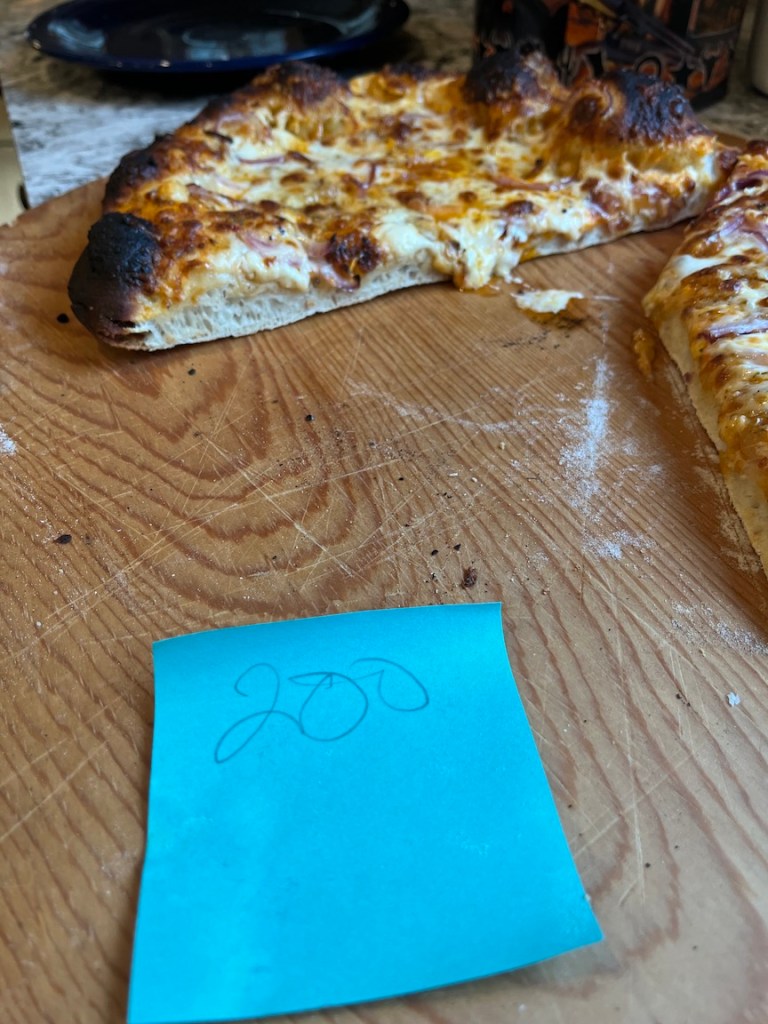
200 g Flour
This dough had, as expected, the most backbone. It was more “bready” but still a nice airy crumb and good chew. Very easy to work and not sticky. Better for stretching out to a thinner pizza. A dough from 170 to 200 would be easier if you need to knead with your hands.
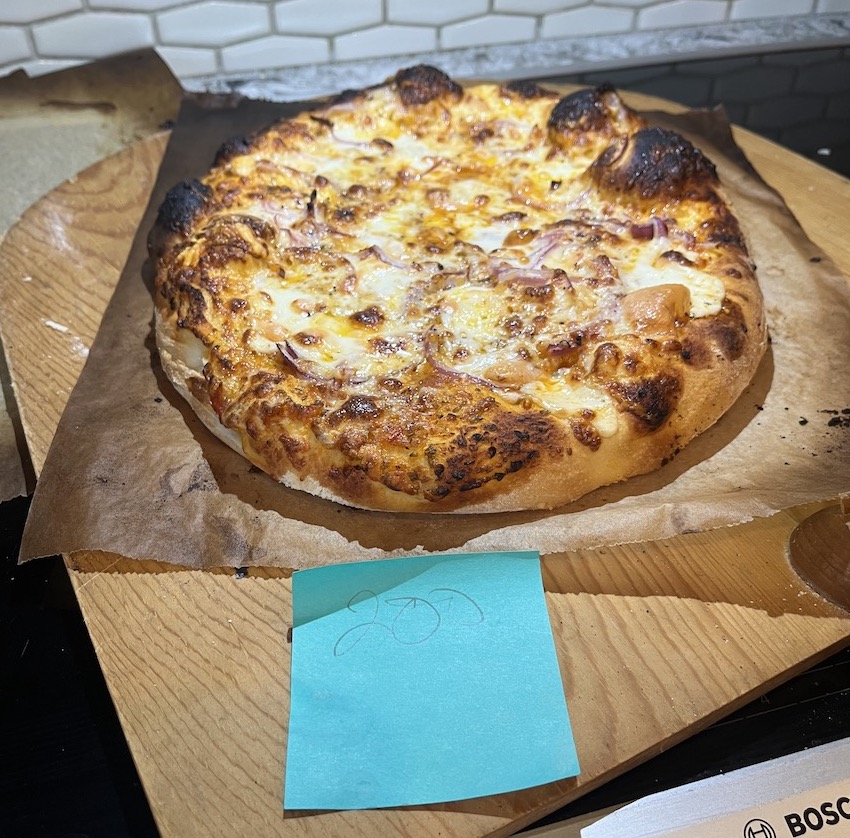
The pizza was made with tomato sauce, taleggio cheese (cut into cubes and dotted around the sauce, sliced red onion and topped with a good amount of fresh ground pepper.
Each dough made a tasty pizza with 140g #1 because of how lit and airy it was. They all held up well to their ingredients and did not have the nose sag.
 Ranch Cook
Leave a comment